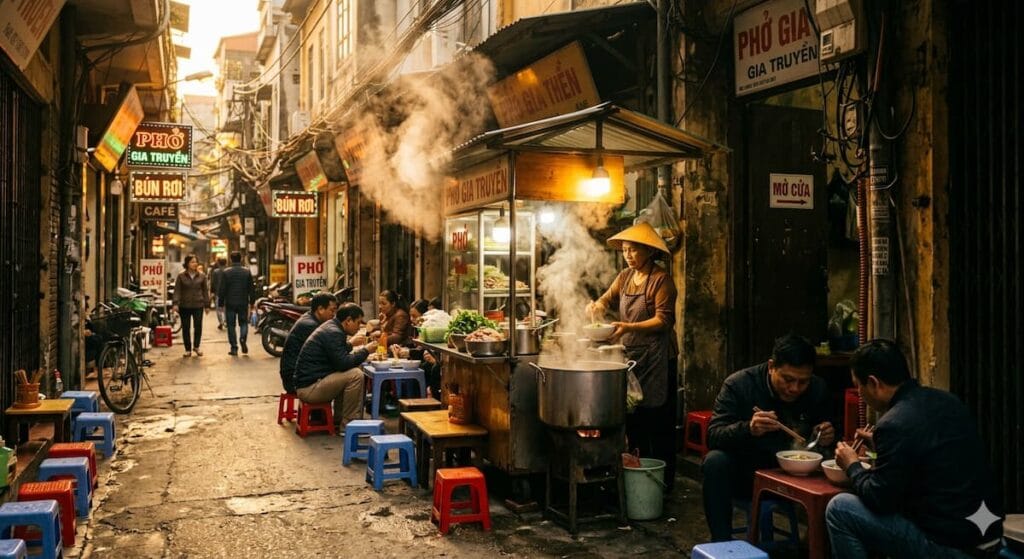
At 6 a.m., the alleys of Hanoi are already alive. Smoke rises, the smell of fish sauce mingles with the scent of charcoal, and low plastic chairs are packed with people. Some eat pho while looking at their smartphones, while others quickly empty their broth with their motorcycle helmets placed beside them. This is the scene at a famous Hanoi restaurant that I have encountered every morning for the past ten years.
Travelers search for famous restaurants in Hanoi. They turn on Google Maps, choose a place with many reviews, and wait in line. Today, too, I simply walk to the shop run by an elderly woman tucked away in an alley. If asked why I have been going to the same place for 10 years, it is difficult to give a specific answer. Is it because it is delicious? Of course. But more than that, it is because that shop has become a part of my daily life.
Hanoi food is not something you seek out, but something you get used to. It feels unfamiliar at first, okay the second time, and by the tenth time, it feels empty without it. This is not a list of famous restaurants. It is the daily meal routine of a resident who has lived here for 10 years.
Morning starts with soup.
Mornings for people in Hanoi begin with hot soup. The two most popular choices are pho and bánh cuốn. While tourists mostly choose pho, bánh cuốn is a more common breakfast choice among locals.
Banh Cuon is a dish made by wrapping minced pork and wood ear mushrooms in a thin, steamed rice flour wrapper and dipping it in nước mắm sauce. It is hot, soft, and light. On days when I don't want to eat something heavy in the morning, it is banh cuon; on days when I need to eat something hearty, it is pho. This is the choice I have made every morning for the past 10 years.
The biggest difference in Hanoi street food lies in the location. Even for the same pho, the taste is different between a restaurant in a tourist area near Hoan Kiem Lake and a neighborhood shop run by an elderly woman. Pho in tourist areas is served neatly and beautifully plated. Neighborhood shops, on the other hand, operate without tables, placing small plastic chairs out on the sidewalk. The broth is rich and cloudy, the bowls are worn out, and if you ask for extra side dishes, the owner will look out for you without you even noticing.
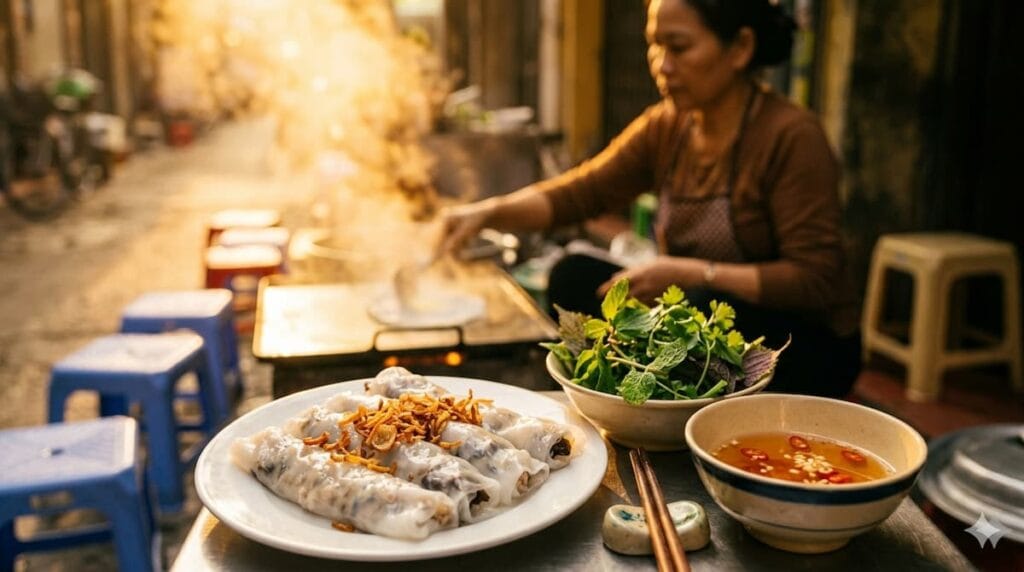
If you visit a neighborhood soup shop before 7 a.m., the customers are all locals: delivery drivers, construction workers, and mothers holding the hands of their children heading to school. A bowl of pho costs 30,000 to 50,000 VND (about 1,600 to 2,700 KRW), and banh cuon costs 30,000 to 40,000 VND. These prices represent the true cost of a morning in Hanoi.
Lunch — Between Bun Cha and Obama
In May 2016, President Barack Obama visited Hanoi. He ate Bun Cha at 'Bún chả Hương Liên' on Lê Văn Hưu Street with Anthony Bourdain, and the video of the meal spread worldwide. The restaurant subsequently became famous as the 'Obama Restaurant,' and tourists still line up there today.
Hanoi was briefly abuzz when Obama visited that restaurant. That day, too, I had lunch at a local bun cha place. That is exactly the distance between fame and everyday life.
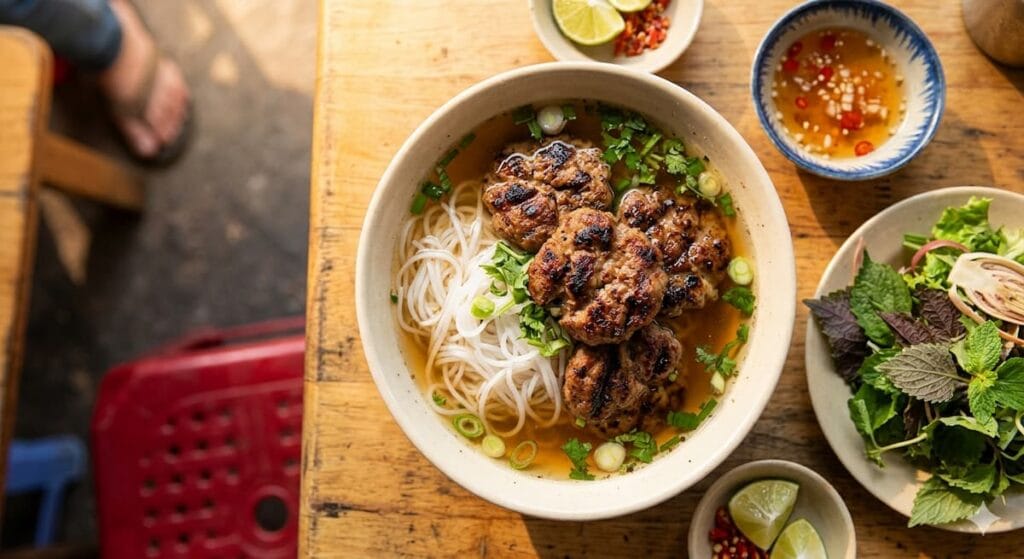
Bún chả is a representative dish of Hanoi. Charcoal-grilled pork patties and pork belly are dipped in nuoc mam broth and eaten with rice noodles (bún) and fresh herbs. The grilled aroma infuses the broth, creating a sweet, sour, and salty flavor. First-time eaters might be momentarily confused about whether to dip the noodles in the broth or eat them separately, but there is no right answer. Locals simply eat it however they like.
The key to properly enjoying Bun Cha lies in speed. Lunch for Hanoi locals is fast. They order as soon as they sit down, start eating immediately upon arrival, and finish within 15 to 20 minutes. The table is always cluttered. It welcomes the next customer with soup stains, herb stems, and bowls of fresh kimchi all mixed together. This chaos is the true Hanoi lunch.
Neighborhood bun cha shops usually cost between 40,000 and 60,000 VND (about 2,200 to 3,300 KRW). Prices can go up to 120,000 to 180,000 VND at restaurants near tourist attractions or famous establishments. The food itself isn't significantly different. However, the neighborhood shops, with their strong charcoal aroma and fresh herbs, suit my taste better.
If you want to plan your Hanoi travel itinerary first → Hanoi 3-night, 4-day route
3 PM, a cup of egg coffee
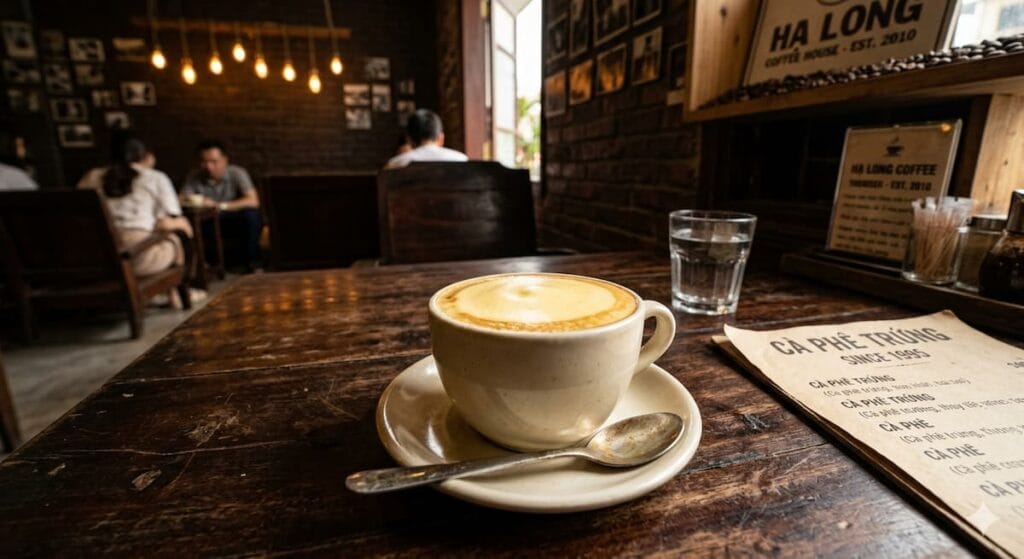
Café Giang first created egg coffee in 1946. In the post-war era when milk was scarce, founder Nguyen Van Giang substituted egg yolks for milk to create a rich layer of cream. This became Hanoi's unique egg coffee. Although there are now egg coffee cafés all over Hanoi's Old Quarter, Café Giang is still considered the originator.
Honestly, I was taken aback when I first tried egg coffee. I couldn't imagine egg yolk cream sitting atop hot coffee. It was sweet and rich, blurring the line between coffee and dessert. The second time, I thought, "So this is the taste of Hanoi," and by the tenth time, I found myself naturally heading to a cafe at 3 PM.
Whenever asked for Vietnamese food recommendations, I never leave out egg coffee. While you can eat pho or bun cha in the South, egg coffee is a dish that was perfected in Hanoi. There is a cold version (cà phê trứng đá), but if it is your first time, you should drink the hot version to truly appreciate the taste.
A city's history is embedded in a single dish. The choice to use eggs instead of milk due to a lack of milk has now become Hanoi's representative beverage. Egg coffee at local cafes costs between 35,000 and 50,000 VND (approximately 1,900 to 2,700 KRW).
If you would like to spend half a day walking around Hanoi and trying these foods firsthand, a Hanoi food tour with a local guide is also available.
👉 Inquire about tours
Dinner in the Alley — Bundau Mam Thom
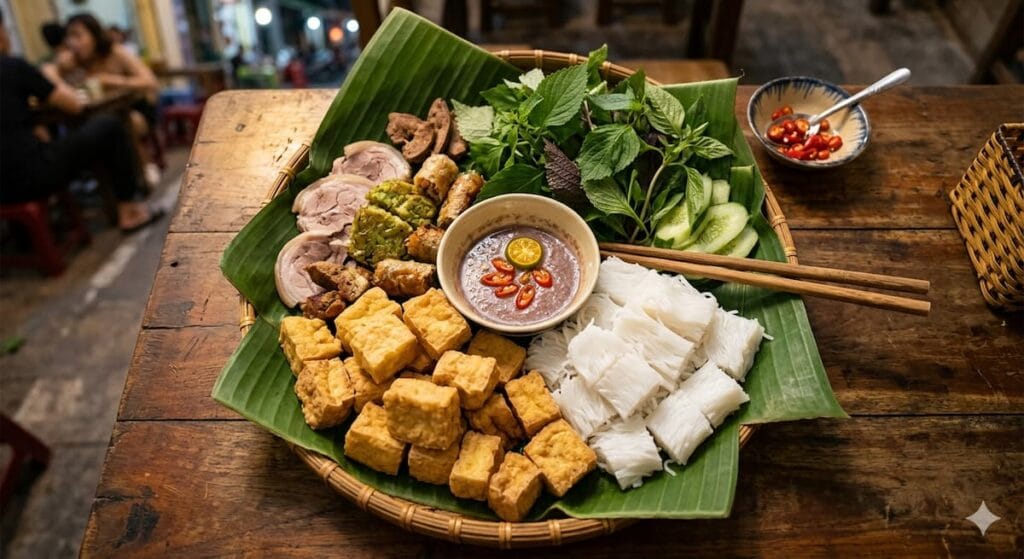
Bún đậu mắm tôm is the dinner dish I eat most often in Hanoi. Tofu (đậu) is fried until golden brown, served with rice noodles (bún) and fresh herbs, and dipped in fermented shrimp paste (mắm tôm).
When I first smelled Mamtom, I thought I wouldn't be able to eat it. The strong, distinctive smell of fermented shrimp paste is initially unfamiliar and off-putting. I saw the travelers I was with shake their heads in disapproval several times after smelling it once. I felt the same way at first.
Nowadays, it is stranger to eat Bun Dau without Mam Tom. When the scent of fermentation meets the nutty flavor of tofu, it creates a completely different taste. Locals lightly touch their tongues with the first spoonful to check the consistency, then top it generously with herbs and eat it together. If you are put off by the smell, I recommend adding plenty of herbs and trying it little by little.
On special occasions, people eat Cha Ca La Vong. It is a fish dish unique to Hanoi, consisting of fish fillets seasoned with turmeric and dill and pan-fried. If Bun Dau Mam Thom is a daily staple of the alleys, Cha Ca La Vong is a special Hanoi dish sought out when one wants to set a special mood.
A Bun Dau Mam Thom dinner is sufficient for 50,000 to 80,000 VND (approximately 2,700 to 4,400 KRW).
The reason I don't get tired of it even after 10 years
Eating the same food in the same city for 10 years. This may sound monotonous, but in reality, it is not. The pho broth varies with the seasons, the charcoal-grilled aroma of bun cha changes with the weather, and the consistency of the egg cream in egg coffee differs slightly from shop to shop. Even after 10 years, that single bowl of food is always slightly different on any given day.
The difference between how travelers look for good restaurants in Hanoi and how locals go every day is actually simple. Travelers look for the “one absolute best place.” Locals go to “a place that fits their mood today.” It’s not that there is a specific, exclusive restaurant; rather, if you visit a place often, it becomes your go-to spot.
Great restaurants in Hanoi aren't found; they just appear. At first, you might search the internet because you don't know where to go, but after visiting Hanoi two or three times, you will naturally have a favorite spot in your mind: "that alley restaurant I went to last time." That is the beginning of a true Hanoi culinary experience.
The repetition of food becomes the rhythm of life. A morning starting with pho, a lunch ending with bun cha, an afternoon catching one's breath with egg coffee, and a dinner of bun dau mam tom in an alley. The reason this routine never gets old, even after 10 years, is not because the taste is special, but because the food fits perfectly with the rhythm of the city of Hanoi.
If you want to experience the alleys and food of Hanoi that package tours don't show,
👉 Consult on local guide tours
The author resides in Ha Long Bay and works as a tour guide, operates a travel agency, and engages in local investment. For private tour consultations and travel inquiries, please use the 'Tour Inquiry' option in the top menu.